


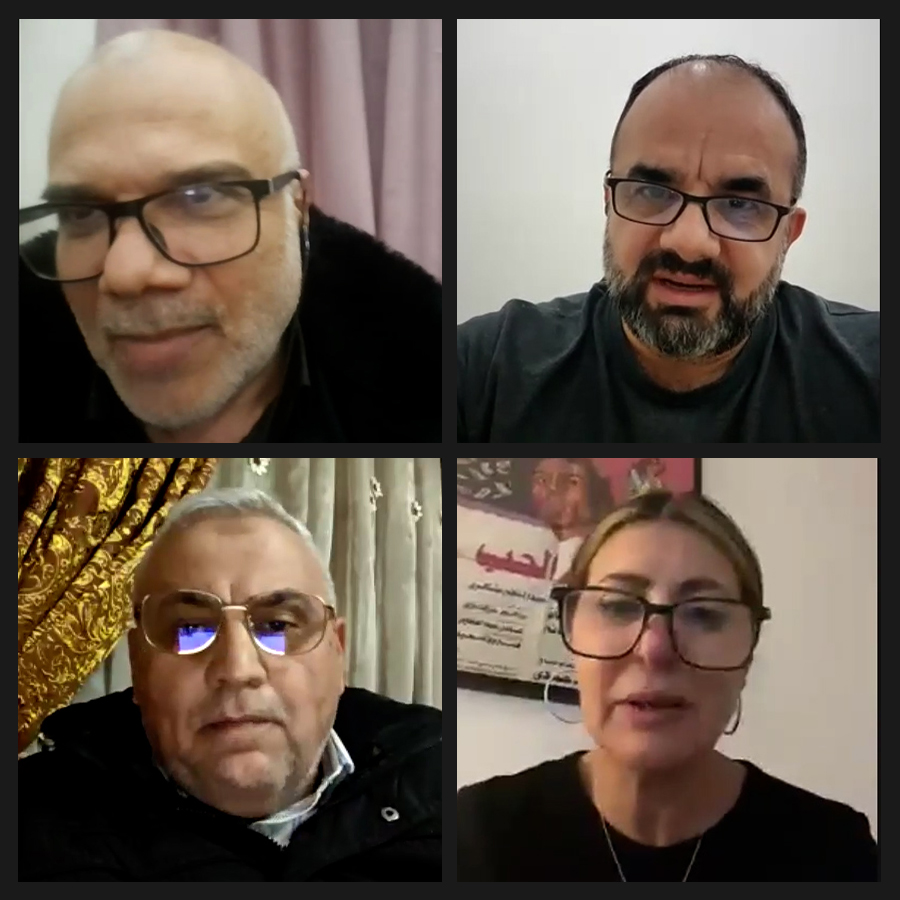
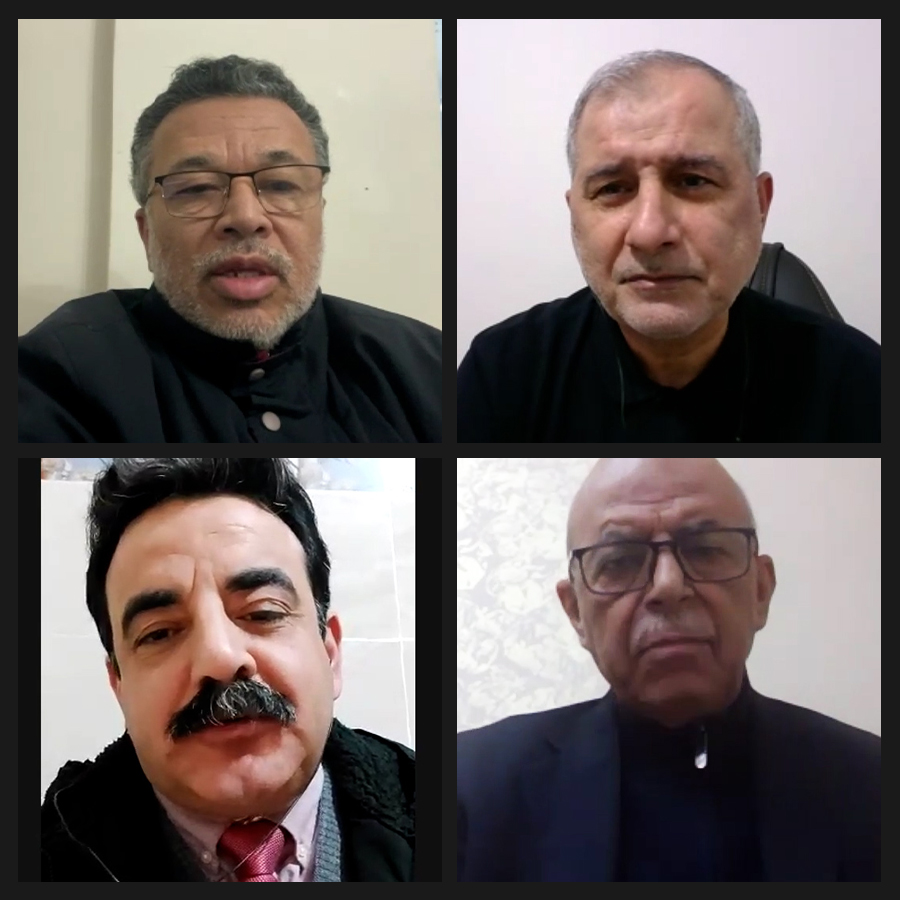
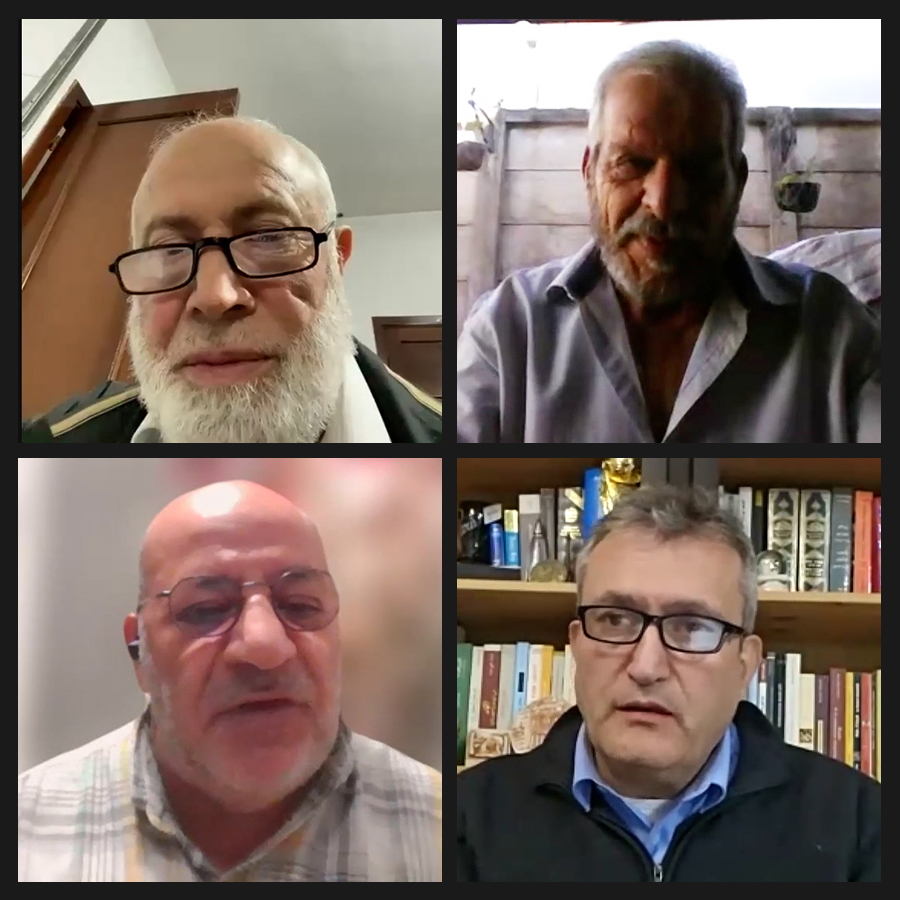
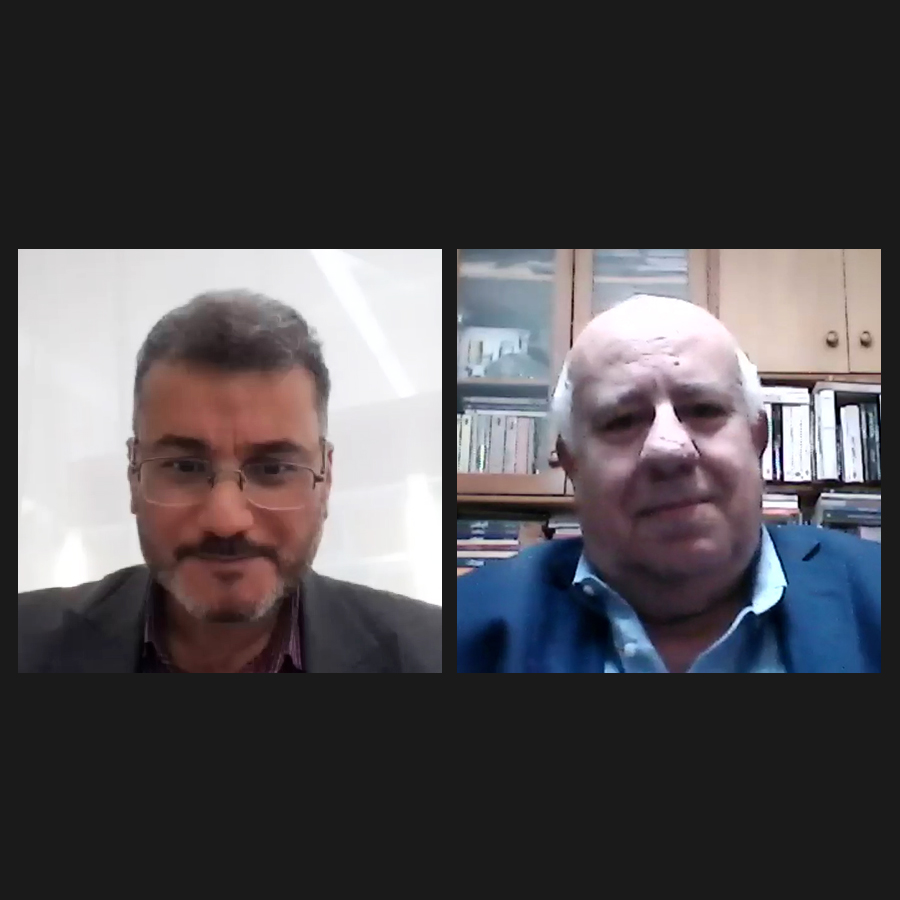
Al-Zaytouna Centre for Studies and Consultations held on 7/1/2026, a seminar entitled “Anticipated Trajectories of the Palestine Issue in 2026,” with the participation of a selection of dozens of experts and specialist in Palestine affairs.
Moderated by the General-Manager of Al-Zaytouna Centre, Prof. Dr. Mohsen Mohammad Saleh, the seminar featured nine papers examining the prospective trajectories of the Palestine issue throughout 2026. These papers were followed by in-depth discussions involving a broad group of experts and specialists, after which the main speakers offered responses and clarifications in the concluding session.
Outlined below are the most salient projections and assessments advanced by the experts in their seminar papers.
First Paper by ‘Atef al-Joulani: Anticipated Trajectories of the Palestinian Internal Situation
‘Atef al-Joulani projects that 2026 may see the emergence of a partial Palestinian understanding between the Palestinian Authority (PA) in Ramallah and Hamas concerning the establishment of an administrative committee to govern the Gaza Strip (GS), under Arab auspices and with US approval. He underscores, however, that such a limited arrangement would not amount to meaningful progress toward comprehensive national reconciliation. Instead, he expects the Palestinian schism to persist, alongside the continued monopolization of political decision-making by the PA and its refusal to put the Palestinian political house in order or to integrate resistance forces on the basis of genuine national partnership and free, fair elections that reflect the will of the Palestinian people. Within this context of political impasse, al-Joulani anticipates a growing role for Palestinian popular initiatives and grassroots conferences as a provisional mechanism for articulating a shared national stance, pending the availability of more favorable political conditions.
He further anticipates that the PA will maintain its security coordination with Israel, and that its primary focus throughout 2026 will be on fulfilling the prerequisites and conditions for its rehabilitation and reform in accordance with US-prescribed requirements.
Second Paper by Dr. Muhannad Mustafa: Anticipated Trajectories of Israeli Conditions and Policies
Dr. Muhannad Mustafa argues that 2026 will be a complex year for Israel, and that Israeli elections are unlikely to bring about any substantive change in state policies toward the Palestinians, given the existence of a broad, cross-ideological consensus in Israel’s approach to Palestinian affairs.
With respect to the GS, he maintains that Israel will not undertake a full withdrawal and will continue to exercise control over certain areas, even if a transition to the second phase of the agreement were to take place. Israel, he notes, rejects the continued presence of Hamas in power and insists on its disarmament. He further anticipates the continuation of Israeli military operations at varying intensities, backed by US support, without escalation into a full-scale war, with an emphasis on limited operations that do not fundamentally alter the governing structure in the GS.
In the West Bank (WB), settlement expansion, road construction, home demolitions, and the systematic weakening of the PA are expected to deepen further. Israel is also projected to persist in undermining Palestinian society within the Green Line through tacit complicity in patterns of crime and violence, within a broader strategy aimed at marginalizing the Palestine issue and precluding the emergence of any independent political entity.
Third Paper by Ziad Bhies: Anticipated Trajectories for al-Aqsa, Jerusalem and WB
Ziad Bhies anticipates that 2026 will witness further escalation, notably through the deepening assertion of Jewish identity at al-Aqsa Mosque via extended incursion hours, attempts to appropriate sections of the compound, and the imposition of animal sacrifice rituals (korbanot).
He observes that Israel treats the Ibrahimi Mosque as a model for erasing Islamic identity and seeks to replicate this approach in the Judaization of al-Aqsa. Simultaneously, Bhies highlights a marked decline in the Palestinian Christian presence, driven by sustained efforts to curtail Christian life, reducing it to a largely visitor-based role.
In Jerusalem, the robust Palestinian population and its steadfastness represent a structural challenge to the Israeli occupation, prompting intensified policies of displacement and home demolitions, particularly in Sheikh Jarrah and Silwan, alongside the expansion of “Greater Jerusalem.” In the WB, de facto annexation continues through checkpoints, settlement growth, and the Separation Wall, pending its formal declaration.
Fourth Paper by Mueen al-Taher: Anticipated Trajectories of Palestinian Resistance
Mueen al-Taher noted that although the most recent military confrontation has subsided, the broader conflict in its various forms persists, making it too early to assess its final outcome. He highlighted that the political and geographic division between the GS and the WB will shape differences in tactics and modes of resistance in the coming period.
Al-Taher stressed that resistance is a dynamic and evolving concept. He anticipates tactical adaptations in 2026, continued military and political pressure on GS, and attempts to coerce the resistance through humanitarian or political concessions, and possibly drawing on models akin to the Irish experience. In the WB, he foresees the intensification of resistance across multiple forms, from individual operations to clandestine cells, framed within a comprehensive national strategy that integrates armed struggle, popular resilience and political and civil action.
Fifth Paper by Hani al-Masri: Anticipated Trajectories of the Trump Plan and the Peace Process
Hani al-Masri expects that 2026 will see neither a political settlement nor a revival of the peace process, but rather the continuation of open conflict. He observes that the Israeli government views the period as a historic opportunity to resolve the conflict through annexation, settlement expansion, the deepening of the apartheid system, and the transformation of the PA into a limited, functional entity, while persisting in aggressive hostilities despite failing to achieve “absolute victory.”
Al-Masri further observes that the US role, particularly under the Trump administration, has not served as a catalyst for a peace settlement, and that international mediators have failed to initiate a serious political track. He concludes that the absence of a unified Palestinian national vision and the persistence of the Palestinian schism have heightened risks, while opportunities lie in either national unity or the managed governance of the schism to mitigate its detrimental effects.
Sixth Paper by Sameh Singer: Anticipated Arab Trajectories Regarding the Palestine Issue
Sameh Singer projects that in 2026, official Arab efforts will concentrate on rehabilitating the PA to enable its return to governance in the GS, with political and financial support from Gulf states and security assistance from Egypt and Jordan through police training. He notes that the UAE is likely to seek the reintegration of certain dissident Fatah leaders, most notably Muhammad Dahlan, within future political arrangements.
Singer highlights that Arab states, particularly Egypt, Qatar and Jordan, will advocate for the implementation of the second phase of the deal and accelerate comprehensive reconstruction, without making progress contingent on the disarmament of resistance forces. They are also expected to prioritize preventing displacement and ensuring the full reopening of crossings. Meanwhile, Israel is likely to continue restricting the PA’s role to security and service functions, while Singer anticipates further tightening of restrictions on resistance factions within the Arab landscape.
Seventh Paper by Prof. Dr. Walid ‘Abd al-Hay: Anticipated International Trajectories Regarding the Palestine Issue
Prof. Dr. Walid ‘Abd al-Hay analyzed the international dimension of the Palestine issue by examining a range of global crises and indicators, using a cumulative methodology covering 27 international metrics. He argued that major international crises, such as rising tensions in Latin America with the revival of the Monroe Doctrine, potential escalation over Taiwan, continued instability in the African Sahel and the pronounced political fragility of the Arab region, are likely to impact the Palestine issue indirectly by diverting international attention and prioritizing other conflicts.
He further identified broader global trends with potential implications for Palestine, including the sustained increase in global military spending, rising risks of major confrontations, and intensifying competition over scarce resources. ‘Abd al-Hay expects that these economic and geopolitical pressures could slow Gaza’s reconstruction efforts and may even be leveraged to encourage emigration.
He emphasized that certain factors and events could reshape the regional environment, producing significant repercussions. While global public opinion toward Palestine has improved somewhat, he noted that this shift has no immediate tangible impact. Concluding his analysis, he reported that results from the quantitative assessment, using the Cross-Impact High Matrix methodology, indicate that 53% of current indicators favor Israel, 37% favor Palestine, and the remaining 10% depend on forthcoming political developments.
Eighth Paper by Prof. Dr. Talal ‘Atrissi: Anticipated Iranian Trajectories on the Palestine Issue
Prof. Dr. Talal ‘Atrissi anticipates that Iran’s stance on the Palestine issue will remain consistent throughout 2026, grounded in its support for Palestine and the legitimacy of resistance.
He observes that Iran faces a tense domestic environment, intensified by heightened threats following the Israeli–US war, which compels it to prioritize the enhancement of its defensive capabilities. Simultaneously, Iran is under regional and international pressure aimed at weakening and isolating it, as well as undermining its allies through efforts to disarm resistance forces, an approach intended to pave the way for a regional order based on normalization and the marginalization of resistance actors. As a result, Iran will confront a complex and multifaceted challenge: safeguarding its internal stability, engaging in negotiations to avert further conflict, maintaining readiness for defense and potential military engagement, supporting resistance movements and simultaneously working to expand regional relationships and build channels of trust with Arab states.
Ninth Paper by Dr. Said El-Haj: Anticipated Turkish Trajectories Regarding the Palestine Issue
Dr. Said El-Haj noted that Türkiye’s role in the Palestine issue in 2026 is expected to continue along the trajectory of recent years, evolving from political support and humanitarian aid to active engagement as one of the guarantor states in ceasefire negotiations and reconstruction efforts in the GS. He anticipates a stable relationship with Hamas, with no major changes, while Türkiye seeks to maintain close communication with the movement’s leadership in line with US interests, particularly in strengthening Türkiye’s role as a mediator to guide Hamas toward political solutions and the implementation of Trump’s initiatives.
Regarding its relationship with Israel, El-Haj emphasizes a rising risk of indirect confrontation, alongside preparations for a potential future military conflict, possibly in Syria. He views Ankara’s promotion of Syrian-Israeli negotiations as a strategic effort to defuse tensions. At the same time, Türkiye is strengthening its domestic defense capabilities, avoiding direct engagement, and remaining open to cooperation with the US administration on GS-related issues.
Following the presentation of the papers, 18 participants contributed additional insights, observations and questions. The presenters then responded to these interventions. The session concluded after two and a half hours of substantive discussion, marked by its scholarly rigor, future-oriented focus, and the active, engaged participation of all attendees.


Al-Zaytouna Centre for Studies and Consultations, 8/1/2026
Leave A Comment