
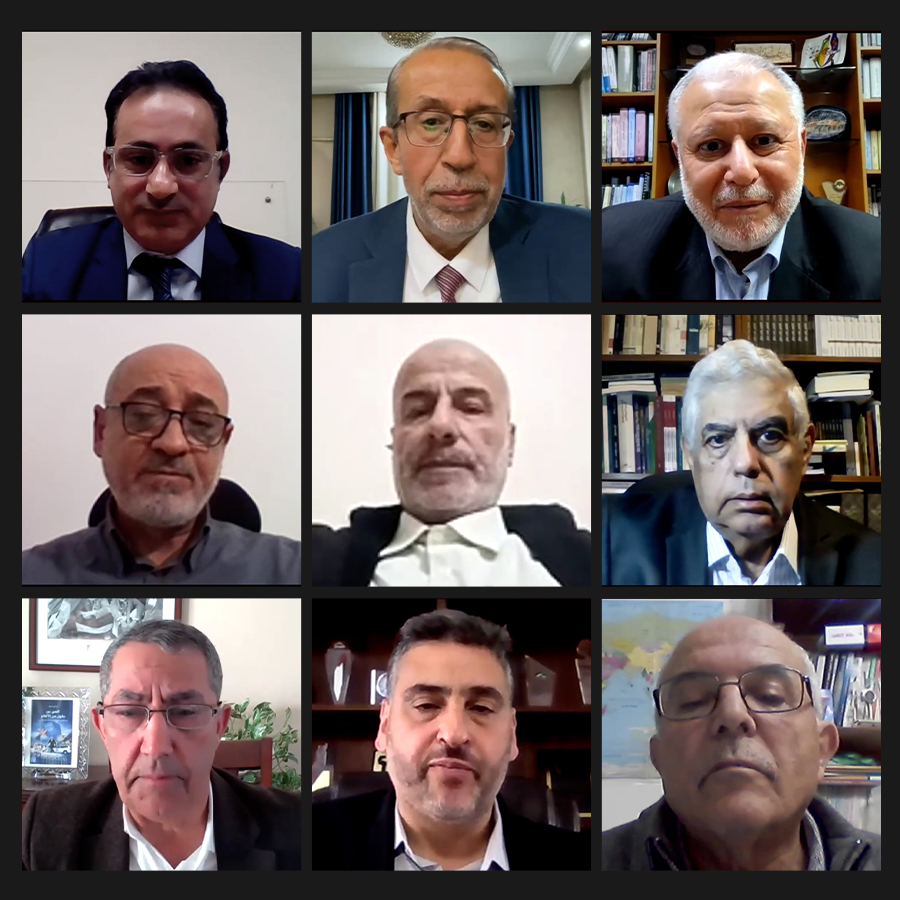
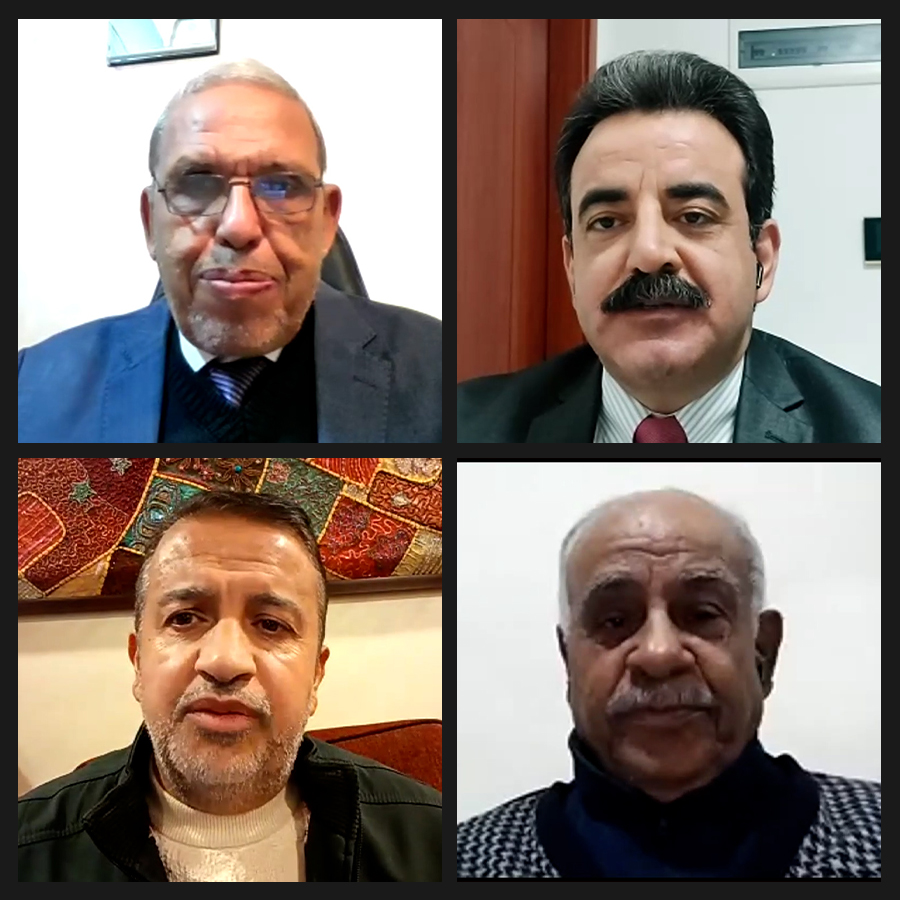
On 11/11/2026, Al-Zaytouna Centre for Studies and Consultations held a panel discussion via Zoom, entitled “Israeli and US Election Results and Their Implications for the Palestine Issue,” with a select group of experts and specialists.
The discussion featured two sessions addressing political developments in Israel and the US. The first examined the balance of power among Israel’s political blocs, prospects for forming the next government, and the implications for Palestinians. The second focused on the potential impact of the US midterm elections on foreign policy, shifts in US public opinion, and the growing political influence of Arab and Palestinian communities.
The first session was moderated by ‘Atef al-Joulani, a Palestinian political and strategic affairs analyst. Prof. Dr. Nihad al-Sheikh Khalil, Professor of Modern and Contemporary History and a specialist in Palestinian affairs, argued that Israel’s two main political blocs share a rejection of Palestinian statehood and view the Palestine issue primarily through a security lens, despite differing approaches to managing the conflict. While Benjamin Netanyahu’s bloc favors military decisiveness, displacement, settlement expansion, and continued warfare, the change camp, led by Gadi Eisenkot, favors conflict management while maintaining Israeli security control over Palestinians. He suggested that divisions within the change camp, coupled with Netanyahu’s personality, could lead to early elections. An Eisenkot-led government, he added, might reduce violence in the Gaza Strip (GS) and facilitate humanitarian aid deliveries, but would be unlikely to alter the fundamentals of Israeli policy. Al-Sheikh Khalil concluded by stressing the need to strengthen joint Palestinian action and resilience, particularly in GS, through greater engagement by social and local actors within a unified national framework.
For his part, Antoine Shalhat, a writer and researcher focusing on Israeli affairs, examined possible scenarios for forming the next Israeli government. He argued that the election results had failed to resolve the contest between the two blocs, instead deepening the political deadlock. He considered Gadi Eisenkot likely to form an alternative government to Netanyahu, either through a coalition with Haredi parties or a minority government backed by Arab lawmakers, with the former being more likely. Nevertheless, he stressed that a change of government would not fundamentally alter Israeli policy toward Palestinians. The change camp, he noted, does not support a two-state solution, while Eisenkot himself has previously endorsed the “Dahiya Doctrine,” which advocates the extensive destruction of areas from which rockets are launched. Shalhat further highlighted the continued opposition of several parties to Palestinian statehood, their calls to dismantle the Palestinian Authority (PA) and revoke the Oslo Accords, and their preference for managing the conflict rather than pursuing a political settlement.
Dr. ‘Abbas Isma‘il, university professor and Israeli affairs expert, focused on the nature of the electoral contest, arguing that it centered primarily on Benjamin Netanyahu and his political future rather than substantive policy differences. The Palestine issue, meanwhile, featured little in the parties’ main campaign agendas. He noted that Israeli political forces broadly agree on rejecting Palestinian statehood in the foreseeable future and seeking to eliminate resistance in GS, despite differences over the means, ranging from displacement to intensified military operations. They likewise share support for settlement expansion in the West Bank (WB). He maintained that none of the possible government-formation scenarios would fundamentally alter Israeli policy or the reality of Palestinian rights, and questioned the ability of Arab parties to bring about meaningful change. Isma‘il warned that the coming period could see further attempts to impose facts on the ground unless there are exceptional shifts in US and Arab positions.
The second session was moderated by Dr. Bassem Elkassem, Head of the Archives and Information Department at Al-Zaytouna Centre. Prof. Dr. Walid ‘Abd al-Hay, an expert in futures studies and international relations, opened by examining the implications of the US elections. He noted that historical experience shows no automatic link between midterm losses by the governing party and strategic shifts in US foreign policy; such setbacks generally lead to tactical rather than fundamental adjustments. Moreover, the election results did not give Democrats the majority needed to override a presidential veto, limiting their ability to bring about substantive changes in US policy toward Israel. Although US military and financial assistance to Israel may face greater scrutiny and pressure, it will remain largely guided by considerations of Israeli security. ‘Abd al-Hay further noted that the election of several members of Congress supportive of Palestinian rights could broaden debate over the war in GS, settlement expansion, and the use of US weapons. He concluded that the results provided greater scope for pro-Palestinian advocacy, but did not signal any fundamental shift in US support for Israel.
Dr. Osama Abu Irshaid, a researcher at the Arab Center for Research and Policy Studies and an expert in international relations, examined shifts in US public opinion toward the Palestine issue. He argued that the recent election results reflected years of organized, cross-sector solidarity efforts that had raised awareness, built institutions, and made Palestine an electoral issue. He noted growing public sympathy for Palestinians over Israel, including among segments of the American Jewish community, amid mounting criticism of the war in GS and unconditional US support for Israel. Abu Irshaid attributed this shift partly to the rising economic and political costs of war, particularly the war on Iran, which has prompted renewed questions about the burden of supporting Israel. Nevertheless, he cautioned against overstating the significance of the results, emphasizing that this progress must be consolidated through sustained, coordinated efforts to translate shifts in public opinion into sustained political pressure.
Dr. ‘Abdelhamid Siyam, Professor of Middle Eastern Studies and an expert in international relations, identified several factors shaping US electoral dynamics beyond the wars in GS and Iran and domestic economic conditions. These included the Trump administration’s immigration policies, particularly deportations and family separations, growing discontent with Trump’s racist rhetoric and personal conduct, and allegations of corruption and abuse of power within his administration. Siyam further highlighted the growing political influence of Arab communities, particularly Palestinian Americans, citing Michigan as an example of electoral contests involving candidates and advocates of Palestinian rights on one side and pro-Israel groups on the other. He called for greater participation in local, state and federal elections, alongside the establishment of an inclusive Palestinian organization to coordinate diaspora efforts and capitalize on these shifts. Siyam concluded that the US has become a key arena for influencing the course of the conflict, rather than merely a secondary front.
Participants in both sessions actively engaged in the discussions, raising important points and offering additional perspectives. Each session concluded with responses and clarifications from the speakers. Overall, the discussions highlighted the implications of political and electoral developments in Israel and the US for the Palestine issue. Despite differing perspectives, participants broadly agreed that prospects for political change in Israel remain limited and that US support for Israel remains firmly entrenched. At the same time, they noted growing solidarity with Palestinians and expanding opportunities to influence US public opinion and political institutions.
The discussion also highlighted the need to translate these shifts into more effective Palestinian action by strengthening national unity, resilience and collective efforts, while expanding political participation and coordinating the activities of Palestinian and Arab communities in the US. These efforts, participants emphasized, are essential to increasing pressure on international actors and challenging Israeli policies.

Leave A Comment