
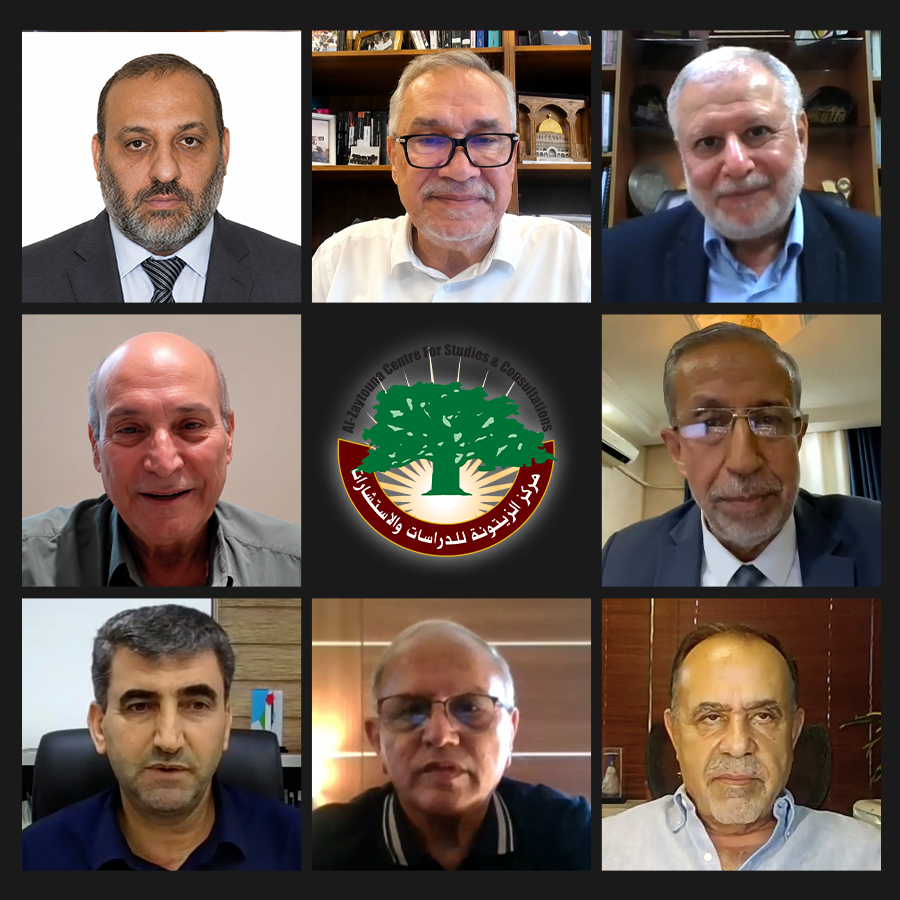
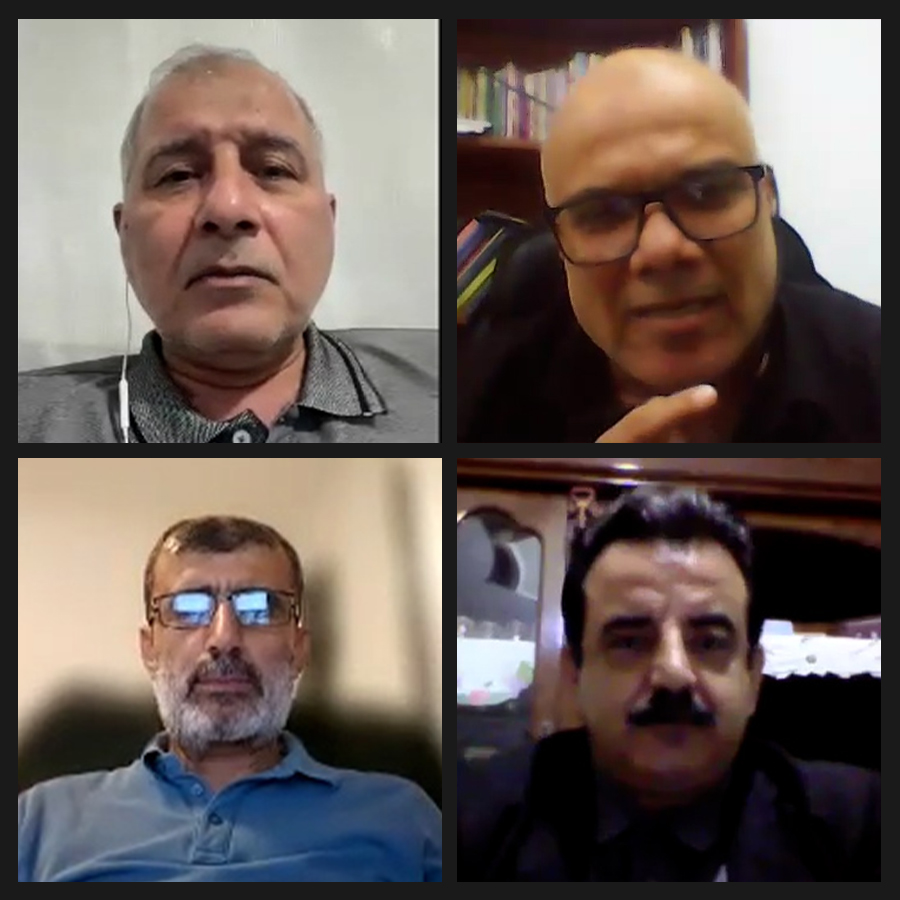
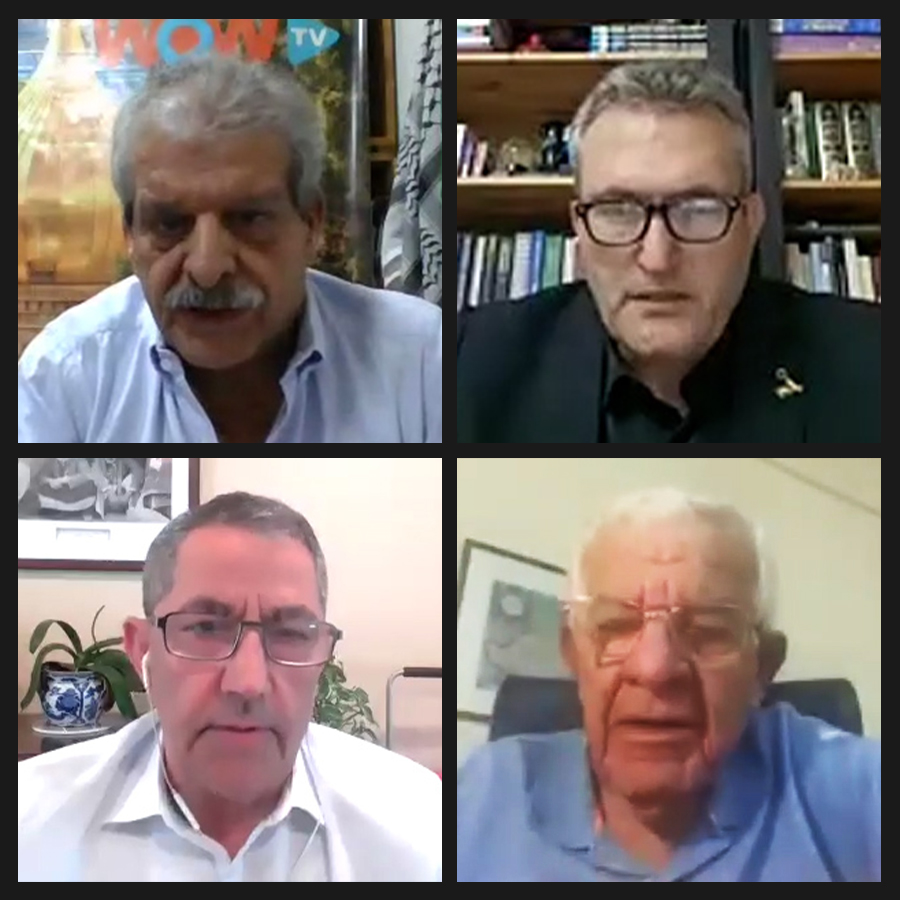
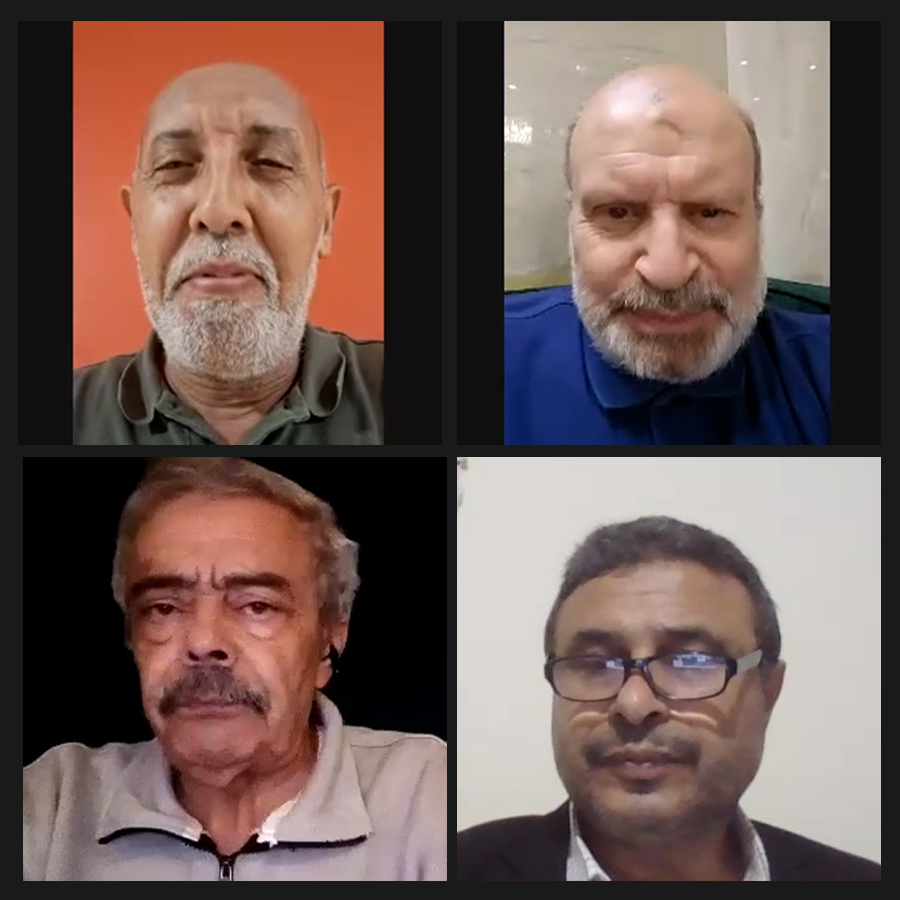
Al-Zaytouna Centre for Studies and Consultations held a panel discussion via Zoom on 2/9/2026, entitled “Moving Beyond the Palestinian Impasse,” bringing together a select group of experts and specialists.
The panel was moderated by Prof. Dr. Mohsen Mohammad Saleh, General-Manager of Al-Zaytouna Centre, who emphasized that the Palestine issue faces unprecedented existential challenges, compounded by crises of leadership, vision, political program, and institutional structure, as well as the Palestinian people’s suffering under occupation. Nevertheless, he stressed that Palestinians possess significant capacities and opportunities on which they can build. He therefore called for moving beyond diagnosing these crises toward practical action and for placing the national interest above partisan, factional and personal interests.
Mu’in al-Taher, Director General of the Arab Center for Research and Policy Studies – Jordan, opened his remarks by emphasizing that the current Palestinian impasse is unprecedented and requires a critical reassessment of past experiences, political programs and tools, particularly amid the repercussions of the Gaza war, settlement expansion, annexation and displacement, and the declining roles of the Palestinian Authority (PA), political factions, and institutions underpinning the national project. Against this backdrop, he argued that the priority should be to redefine the national project and distinguish it from political programs and forms of struggle. He proposed “resistance to the Zionist apartheid regime” as a unifying framework for the Palestinian people, while calling for the Palestine Liberation Organization (PLO) to be rebuilt on democratic and pluralistic foundations and for its role and legitimacy to be restored. He further advocated a strategy centered on steadfastness, resistance to annexation and displacement, diverse forms of resistance, and a stronger Palestinian presence in the homeland and diaspora, alongside greater popular and international efforts to isolate Israel. Al-Taher concluded by underscoring the importance of building a pluralistic democratic national current capable of representing the diverse components of the Palestinian people.
For his part, Dr. Mohammed Ibrahim al-Madhoun, former Palestinian Minister of Culture and Chairman of the Gaza Center for Studies and Strategies, identified elections as a potential entry point for reforming the political system. However, he stressed that elections should not be an end in themselves, but part of a broader process to address the Palestinian schism, rebuild institutions and renew political legitimacy. He emphasized that this process requires inclusive, free and transparent elections encompassing the Gaza Strip (GS), West Bank (WB)., and Jerusalem, with their results respected and political power transferred peacefully. In this regard, he highlighted the importance of integrating the GS into the political process to preserve the unity of the Palestinian people, land and cause. He also called for transforming electoral alliances into political partnerships based on a national program and managing political differences through pluralism, respect for freedoms and judicial independence. Finally, he proposed an institutional roadmap beginning with consensus on the rules governing the political and electoral process and culminating in the reform of political institutions and the unification of the national strategy.
‘Atef al-Joulani, Editor-in-Chief of Assabeel newspaper, focused on the convergence of the internal Palestinian impasse with a growing existential threat to the Palestine issue, the Palestinian people and their land. He argued that confronting these threats should take precedence over internal divisions. Against this backdrop, he cautioned that elections in their current form could become another arena for Palestinian conflict, particularly given the lack of consensus and the marginalization of Palestinians in the diaspora, potentially deepening rather than resolving the crisis. He therefore called for freezing internal disputes, removing inequitable electoral requirements, and ensuring political pluralism and representation, while reaching consensus on Gaza’s future and confronting Israel’s plans for control and tutelage. Moreover, he stressed the need to capitalize on Israel’s growing international isolation and strengthen coordination among national forces committed to Palestinian national fundamentals and resistance. Such coordination, he argued, would provide a stronger basis for confronting external challenges rather than expending efforts on internal conflict.
In his assessment of the Palestinian impasse, Dr. Maher al-Taher, a member of the Popular Front for the Liberation of Palestine (PFLP) Political Bureau and the General Secretariat of the Arab National Conference (ANC), stressed the need to move from crisis management to rebuilding the national movement as a liberation movement. He argued that the Oslo Accords had helped entrench the Palestinian crisis and that overcoming it requires ending the obligations arising from those accords. He cautioned that elections held under occupation and amid internal division could reproduce the existing political system or shift the conflict into the Palestinian arena. Instead, he proposed a transitional phase and a consensual transitional council to prepare for restructuring the Palestinian political system and holding comprehensive elections under more favorable conditions. He also called for rebuilding the PLO as the unifying framework for Palestinians in the homeland and diaspora. Accordingly, he argued that the next phase requires unity, cohesion, a clear vision and diverse forms of resistance, together with measures to strengthen Palestinian steadfastness in confronting projects of killing and displacement.
Oraib al-Rantawi, founder and adviser to the Al-Quds Center for Political Studies in Amman, broadened the discussion, arguing that the Palestinian impasse extends beyond elections to encompass the national project, its political vehicles and the broader structure of the national movement. From this perspective, he questioned whether elections under current conditions could produce meaningful change, noting that the participating forces are motivated, to varying degrees, by the pursuit of legitimacy and political protection. He also highlighted the marginalization of large segments of Palestinians in the homeland and diaspora and called for a reassessment of political representation. Rather than reducing the debate to participation versus boycott, he proposed building a new national coalition bringing together resistance factions, political forces, grassroots initiatives, and popular conferences, capable of establishing a different political balance. He further called for reclaiming and rebuilding the PLO and forming a democratic national current that incorporates independents and younger generations, thereby paving the way for a new political and strategic phase based on different approaches and tools.
In the same vein, Hani al-Masri, Director-General of the Palestinian Centre for Policy Research and Strategic Studies (Masarat), argued that overcoming the Palestinian impasse requires a change in political course and the development of a national alternative, rather than treating elections as the solution. He identified the crisis as the cumulative result of failures in the national project, leadership, institutions, strategies and forms of struggle, underscoring the need for a fundamental reassessment of the Palestinian political experience. Accordingly, he called for a national project that preserves Palestinian rights and the historical narrative while setting achievable objectives for each stage, alongside a broad national front capable of advancing an alternative vision and strategy. Regarding elections, he distinguished between their importance in principle for renewing political legitimacy and holding them in a context that perpetuates the status quo. He therefore stressed that elections should form part of a national project and social contract, be conducted within a consensual democratic framework, and have their results respected. He concluded by calling for a unified position among opposition forces that conditions participation on clear national requirements.
Dr. Ahmad Atawneh, Director-General of the Vision Centre for Political Development, emphasized the role of Palestinian elites and societal forces in overcoming the current impasse. He argued that doing so requires a sustained, long-term effort rather than immediate responses. Accordingly, he outlined four interconnected tracks: first, a comprehensive and systematic critical assessment of the national experience to develop a future vision, program and mechanisms; second, serious dialogue with the political factions, particularly Fatah and Hamas, to draw lessons from past experience and its shortcomings; third, building popular, civil society, and trade-union organizations capable of moving from discussion to meaningful pressure on influential actors; and fourth, self-criticism among elites and societal structures to examine the reasons for their longstanding inability to exert influence. Ultimately, he argued that this process could help develop new tools and advance a more effective national approach to addressing the Palestinian impasse over the medium term.
The discussion also included substantive comments and observations from experts and specialists on the papers presented. In turn, the speakers addressed participants’ questions and comments, offering further clarification and elaboration as the panel concluded.

Leave A Comment